
The Mothership Project
A Prototype for Thinking More Creatively About Climate Action. Inspired by the work of Constance Adams, Harvard ’86
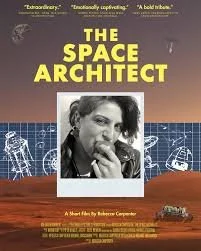
Presented by The Mothership Project + The Space Architect film
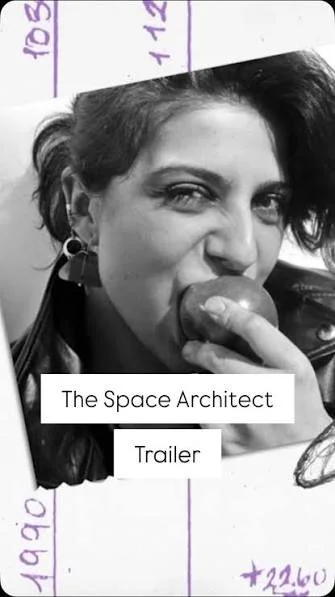
The invitation to HR’86 ClassAct
This isn't a call for institutions to act — it's an invitation for us to act, with joy and perhaps a sense of play. The Mothership Project works because it doesn't wait for permission. Choose an area that speaks to your experience, bring what you already know, and see who else steps forward. If something here resonates, reply back — with a paper, an idea, a name, or just interest — and let's find out what this class can build together.
The idea
The premise is simple: over the next century, climate change could displace billions of people and put significant parts of Earth's biosphere at serious risk — and we don't have to build our response to that from scratch. Space agencies have spent decades developing methods for keeping people alive in extreme, unforgiving environments, like Mars, and those same principles can be adapted to help us plan for a changing Earth.
Our decision to embark on this project stems from the belief that our institutions are not coming to save us. It is time for us - all of us - to take charge of understanding the scope and scale of the climate pressures we are facing, as well as bringing our best minds together to ideate solutions and disseminate them as quickly and as articulately as possible.
About this document
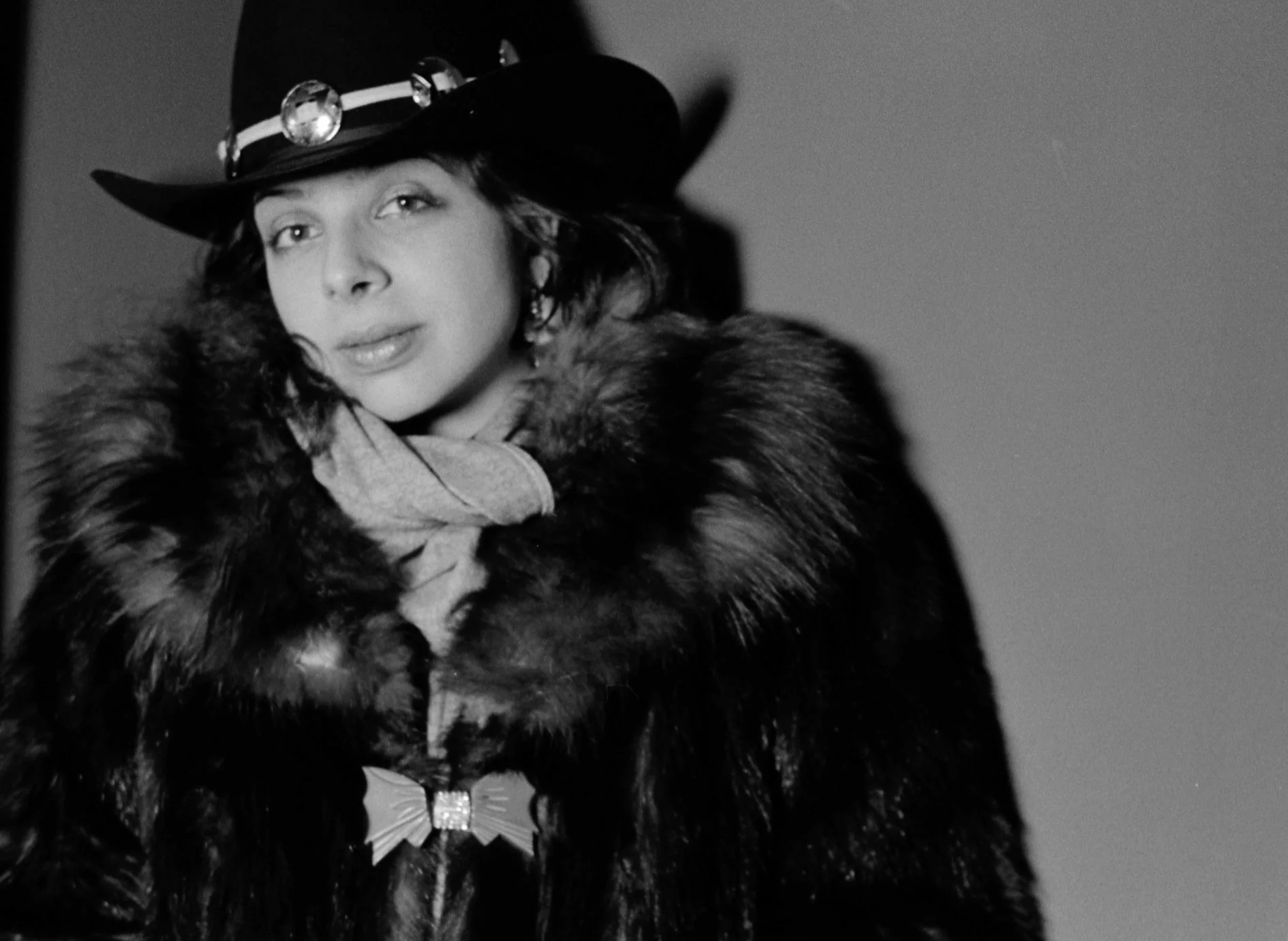
This document is adapted from the work of space architect Constance Adams, who spent her career designing long-duration habitats for human survival on Mars and other extreme environments. At the end of her life, she wrote “ConOps 2050: The Mothership Project Blueprint for Climate Adaptation”, a detailed concept-of-operations document written to define the full scope of what surviving severe climate change would require — from environmental modeling and life support to agriculture, governance, culture, infrastructure, and technology, each broken into granular sub-questions and matched to the specific disciplines needed to answer them. What follows is a shortened, revised version of that framework: the technical depth has been distilled down to the broad problem areas it points to, so that anyone encountering it for the first time can see the shape of the whole effort in a few minutes, rather than needing to work through the original document's full technical detail to find where they fit.
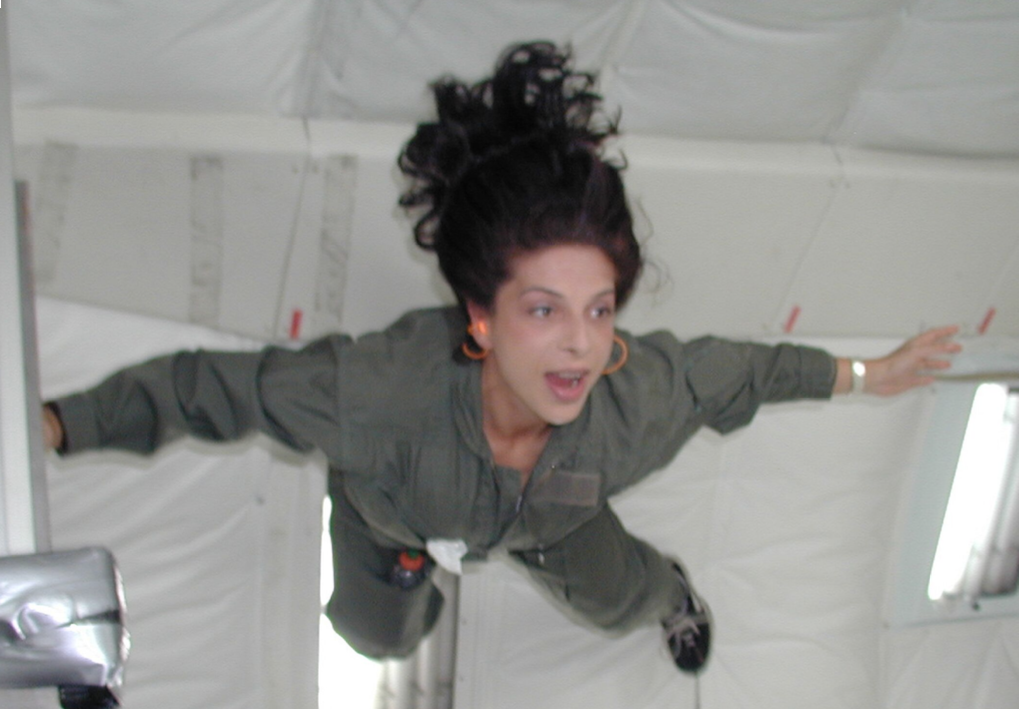
In this document, Adams introduces us to the Tiger Team approach to problem solving. As an architect, she was familiar with the need for disparate skill sets to collaborate successfully on master plans, high performance architecture, and yes, building ecosystems for humans living offplanet. But the Tiger Team approach was next level. NASA famously used a Tiger Team approach during Apollo, most visibly convening one to solve the life-support crisis aboard Apollo 13. Corporations later adopted the model for similar purposes—cybersecurity red-teaming, product failures, or crisis response—valuing it for cutting across silos and bringing the right expertise to bear quickly, without the usual chain-of-command friction. Adams's combined background — building systems meant to grow and adapt, and cities meant to absorb sudden rupture and mass movement — along with understanding the human factors in resource scarce environments at NASA, is what underlies The Mothership Project's approach to climate migration.
Why would we listen to Constance Adams?
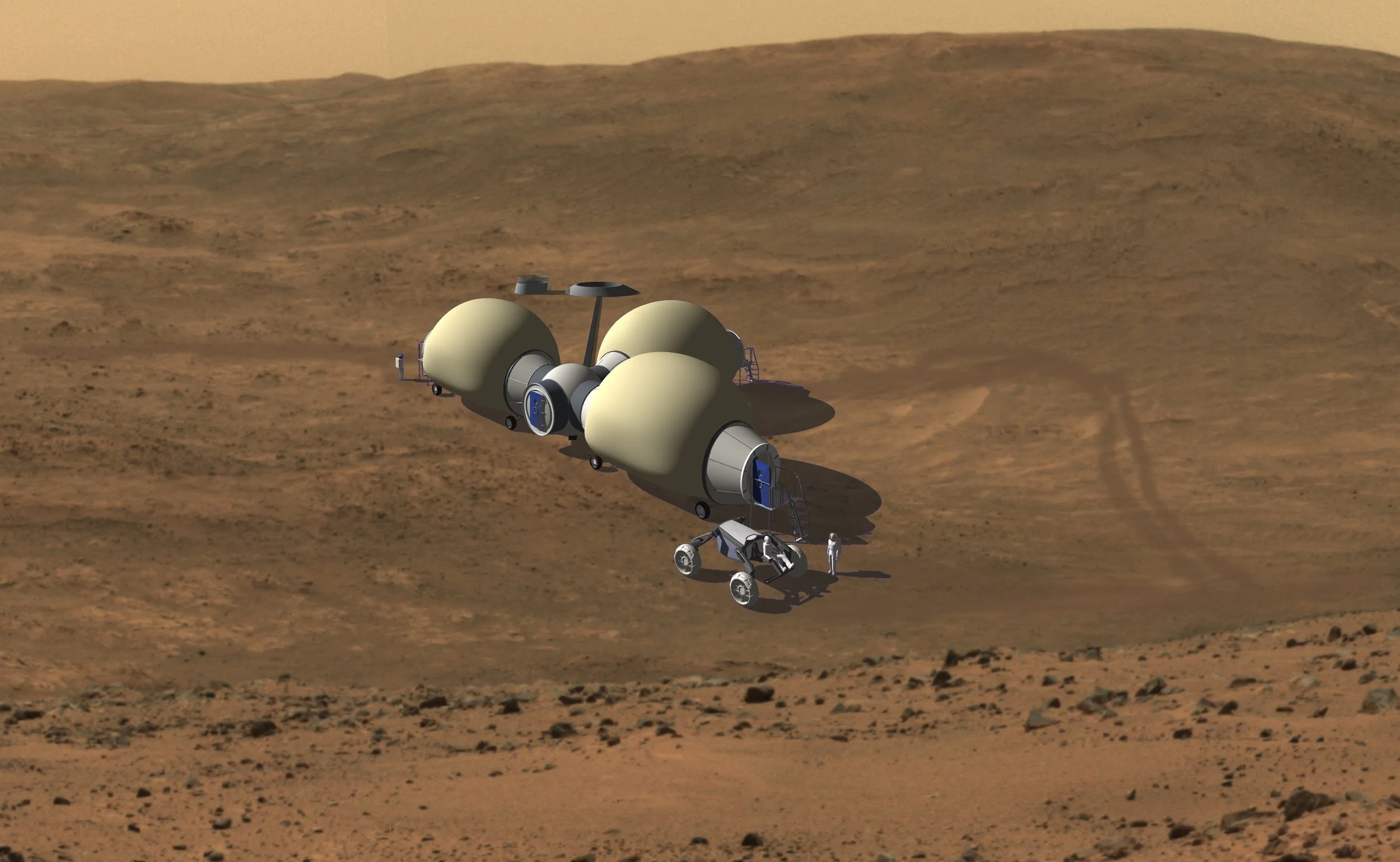
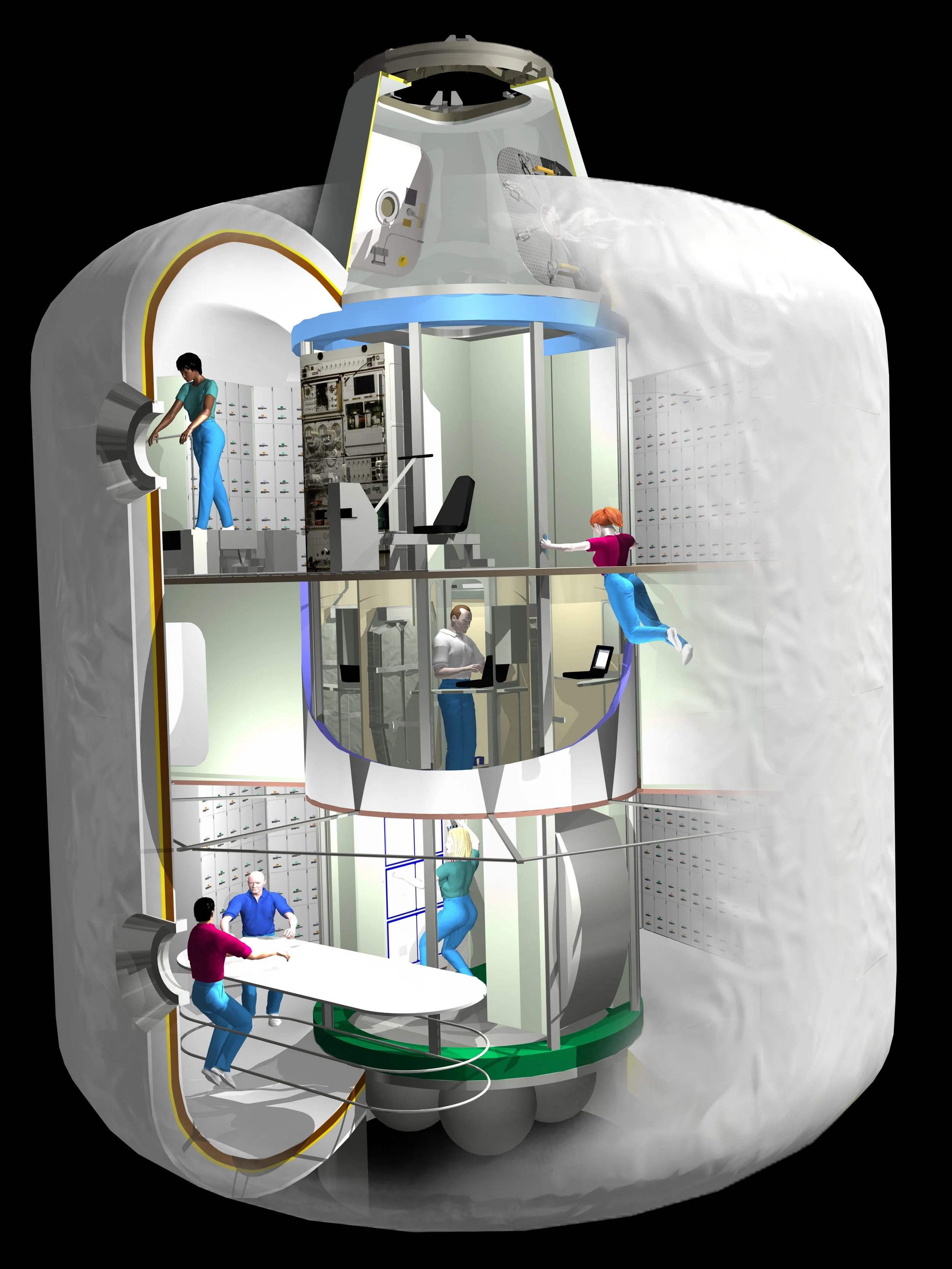
Adams could be a polarizing figure, but what drove her was a deep desire to see people live with greater happiness and resilience. Her most notable design is TransHab, NASA's first human-rated inflatable space habitat module, developed as a long term Mars transit vehicle; as an expandable module for the ISS; and eventually as housing on Mars, with Adams as one of its lead designers. Additionally, before joining NASA, Adams's early career gave her a rare, dual apprenticeship for the problems The Mothership Project grapples with. Under Kenzo Tange, she worked on modular, adaptable architecture designed to grow apace with rapid urban change, as well as large-scale urban planning projects — including in Rome, where the challenge was integrating existing historic structures with modern, flexible housing, public utility, and transportation innovations. Then, in Berlin, she watched a divided city physically and socially re-suture itself in real time: reconciling two incompatible urban fabrics — the dense, pre-war/socialist East grid versus the low-density, car-oriented West under duress from mass migration — while figuring out what to do with sudden swaths of vacant land like the former death strip. That front-row seat taught her that resilient urban planning isn't just about physical infrastructure; it has to account for how fractured populations, mismatched systems, and abrupt discontinuities in governance and culture get knitted back into one functioning city — a lesson that applies directly to planning for large-scale, sudden human migration and resettlement and resource destabilization.
How to use this
Treat this as an overview, not a technical spec: Each area below is described in a sentence or two — enough for someone in a given field to see where their specialty might fit, without getting lost in the granular. If one of these overlaps with your world, a contribution could be as lightweight as pointing us to a paper or an existing invention you're familiar with that could be adapted to climate action, or as involved as leading a working group that takes the issue on collaboratively.
What follows here is a prototype, not a finished plan: a way of thinking she believed could help us approach the scale of problems we face today more creatively, whatever the problem turns out to be.
The idea is this: Using the Bridge model introduced by ClassAct ’73, members of the Harvard-Radcliffe Class of 1986 can invest in The Mothership Project individually or in working groups, bringing their domain expertise, social capital, and decades of team experience to break open our understanding of these problems into something actionable — and, ideally, help carry that understanding out to the wider world.
Adams's original document is far more granular — happy to share it, just ask.
The Bridge Program for Climate Action: Where your expertise could plug in
The goal is to match domain expertise — at whatever level you'd like to engage — from the Harvard Class of 1986 to the broad problem areas below.
An individual effort could be as “simple” as sharing a paper from your domain expertise that addresses an issue in a novel or ground breaking way. The paper could be presented to an interested group in a zoom lunch, in person, or as a conversation. A group effort might be to take one arena of interest — ie, What will be essential in organized religion in migratory societies? Artifacts, rituals, or places of worship? Other factors? Some of these questions are sociological and psychological in nature. Others are the work of the hard sciences. Ultimately, Adams's vision was both broad and granular and spanned multiple disciplines:
Earth & Environmental Systems: Understanding how climate, land, water, and ecosystems are shifting, where, and in what time frames. Climate science, geography, glaciology, and biology.
Life Support, Agriculture & Public Health: Keeping people fed and healthy at scale — how will our food systems be pressured and what are potential solutions? Agriculture, nutrition, waste and sanitation systems, and emergency medicine.
Economics & Governance: Rebuilding functioning economic and political structures. Monetary policy, trade, international law, and diplomacy.
Culture, Education & Community: Keeping communities cohesive and resilient. Education, cultural and religious continuity, and traditional and indigenous knowledge.
Infrastructure, Energy & Logistics: The physical backbone of a functioning society. Power, transportation, utilities, communications, and resource management.
Architecture & Systems Design: Designing the physical, modular systems people will actually live and work in. Habitat design, construction, and fabrication.
Information & Technology: Preserving knowledge and technical capability across disruptions. Data, information security, and research continuity.
Program Leadership & Implementation: Running the effort itself. Leading cross-disciplinary teams, building partnerships, securing resources, open sourcing our findings, and driving execution.